
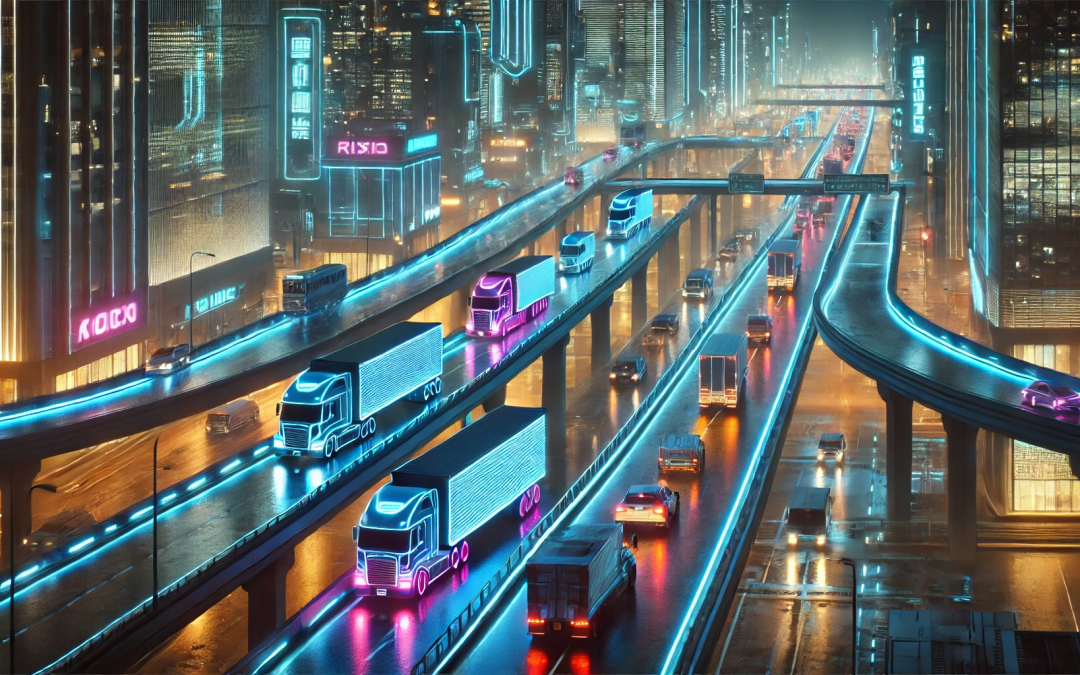
In our previous blog post, we introduced the concept of situational awareness and how it enhances systems by enabling them to perceive, understand, and respond to their environment. As we increasingly hand over control to machines, it’s crucial for these systems to develop a similar kind of awareness. Thanks to advanced AI technologies like computer vision and language models, machines can now go beyond simple automation—they can actively monitor for risks, predict outcomes, and alert us to potential issues. Whether in traffic management, industrial operations, or airport safety, AI is transforming how we manage and mitigate risks.
Today, we continue to explore situational awareness in detail, offering insights into how AI can drive this awareness across different industries. In this blog post, we will focus on the core principles of using AI—particularly computer vision—to achieve situational awareness. We’ll also begin to explore practical applications, starting with traffic surveillance and its potential impact on safety and efficiency.
Situational Awareness via Computer Vision
Computer vision, powered by machine learning, has become a key technology for implementing situational awareness platforms. By enabling machines to interpret and understand visual data from cameras, drones, and other sensors, computer vision allows systems to detect, classify, and track objects in real-time. With machine learning algorithms, these systems not only recognize patterns and anomalies but also continuously improve their accuracy over time. This combination of AI and visual data processing plays a critical role in enhancing situational awareness across various industries, from monitoring traffic flow and detecting security risks to managing industrial operations and public safety.
In a situational awareness platform powered by computer vision, there are three key levels of functionality, each building upon the previous to deliver increasingly sophisticated insights.
-
- Level 1 – Object Detection: This is the foundation of computer vision for situational awareness. At this stage, the system uses classification models to identify objects in the environment. It assigns labels to different objects (e.g., a person, car, or package) and draws bounding boxes around them. This is the basic step where the system simply knows what is in its field of view, forming the basis for further analysis.
- Level 2 – Object Tracking: Once objects are detected, the system advances to tracking them in real-time. This involves following objects that are consistently identified across multiple frames in a video. The system tracks these objects as they move, detecting key events (like movement or actions) and recognizing patterns over time. For example, it can track cars as they drive down roads, pass through intersections, and navigate traffic, or monitor people entering and exiting a building. Object tracking adds an additional layer of context by not just identifying objects but observing and recognizing patterns in their behavior.
- Level 3 – Behavior Understanding: The most advanced stage of situational awareness is when the system begins to understand and predict behavior. At this level, the system analyzes sequences of events and uses anomaly detection to recognize unusual or suspicious behavior. It can predict future actions based on observed patterns, allowing for proactive responses. For example, it can detect if someone isThis predictive capability enables systems to respond to potential risks before they escalate, making this tier vital for real-time decision-making and safety.
This tiered approach enables a system to move from simply identifying objects to recognizing complex behaviors and predicting future events, making it an essential tool for enhanced situational awareness. The observations and predictions generated by this situational awareness platform provide the foundation for automatic, data-driven decisions. By leveraging these insights, systems can take informed actions that directly improve overall performance, enhance safety, and bolster security.
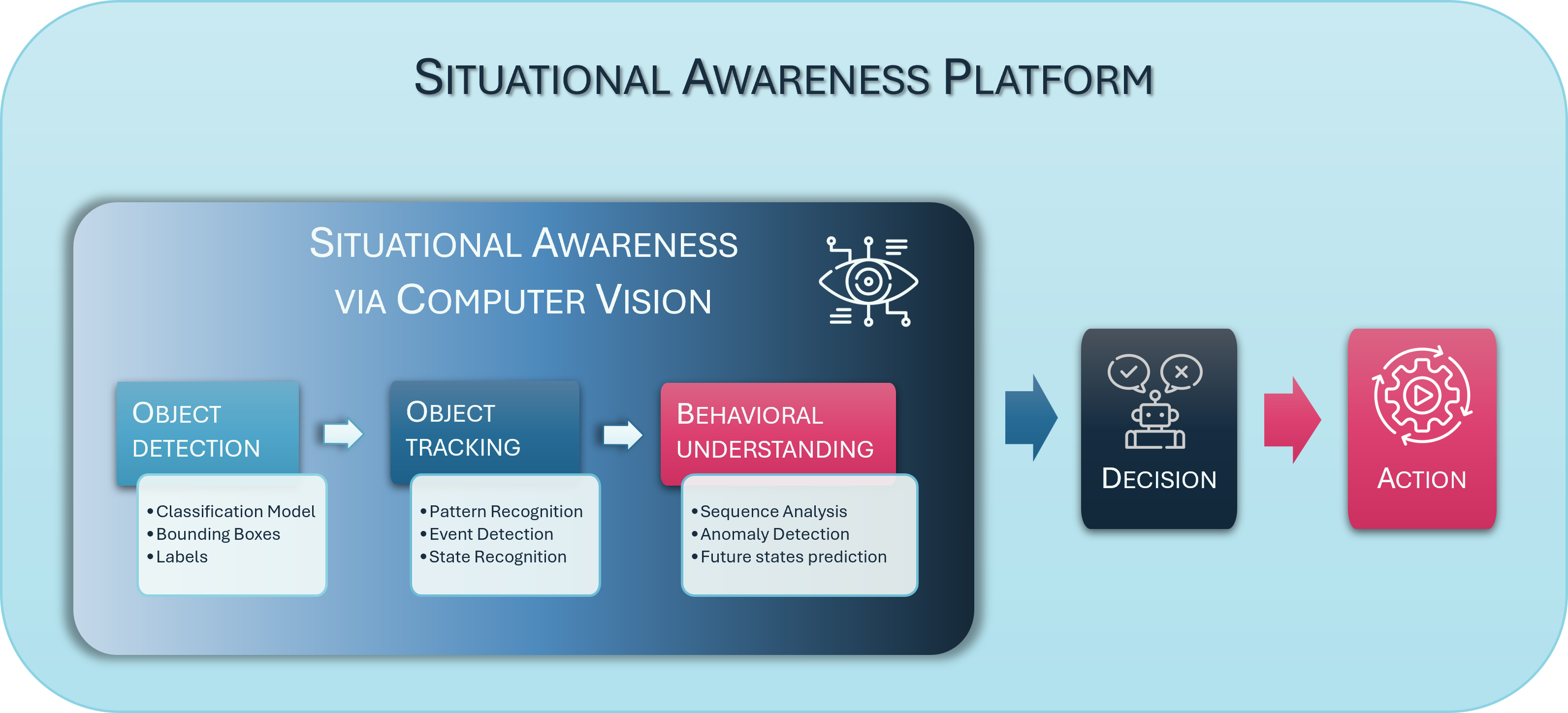
Situational Awareness Platform unifies enables recognizing complex behaviors and predicting future events, providing real-time insights and enabling data-driven, actionable decisions.
AI-Powered Traffic Surveillance
Traffic issues like congestion and safety hazards are constant challenges in growing cities. As the number of vehicles increases, managing traffic becomes more complex. Congestion wastes time, increases fuel consumption, and contributes to pollution, while also raising the risk of accidents as frustrated drivers navigate crowded streets.
Beyond congestion, rule violations such as speeding and running red lights add to dangerous driving conditions. Traditional traffic monitoring systems often struggle to keep up with modern traffic, reacting to problems after they happen rather than preventing them in real-time.
Advanced AI powering modern situational awareness platforms offers a solution to these challenges. Using computer vision and machine learning, it becomes possible to monitor traffic in real-time, detect rule violations, track vehicle behavior, and predict potential accidents. With its ability to analyze large volumes of data and spot patterns, AI can reduce congestion, anticipate traffic bottlenecks, and enable dynamic traffic management, improving both flow and safety.

At the heart of AI-driven traffic surveillance are three crucial stages:
-
- Vehicle Tracking: The primary goal of object tracking in traffic surveillance systems is to monitor and analyze the movement of vehicles and pedestrians in real time. These systems provide vital data for traffic management, including vehicle counting, tracking entry and exit points, detecting line crossings, and estimating speed. By continuously capturing and processing this information, traffic authorities can optimize traffic flow, identify congestion points, enhance road safety, and improve overall traffic efficiency. In addition to vehicle tracking, pedestrian recognition and monitoring play a key role in preventing accidents and ensuring safer urban environments.
- In-Traffic Monitoring: Beyond basic detection, AI systems also monitor and analyze vehicle behavior over time. They can detect rule violations such as speeding, running red lights, or illegal lane changes, as well as identify unusual behavior like sudden stops or erratic driving. This enables quick, informed responses to potential hazards or traffic violations, helping to enhance road safety and reduce accidents.
- Predictive Analytics: Situational awareness platforms are able to understand and predict traffic behavior to provide advanced insights into traffic patterns, congestion, and environmental impacts. By analyzing both real-time and historical data, it is possible to predict potential bottlenecks, assess traffic density’s environmental effects, and offer recommendations to optimize traffic flow. This can help city planners and traffic authorities make data-driven decisions that improve overall traffic management, enhance safety, and reduce pollution.
Conclusion
Data-driven situational awareness is revolutionizing traffic management by helping cities reduce congestion, improve safety, and make more informed, data-driven decisions. Through the use of computer vision and advanced machine learning methods, AI can detect, track, and predict the behavior of vehicles and pedestrians in real-time. This enables cities to shift from reactive traffic management to a more proactive and preventive approach, optimizing traffic flow, mitigating potential hazards, and improving overall urban mobility.
In the upcoming posts, we’ll explore more practical applications, delve into system architectures, and examine how edge AI can further enhance real-time monitoring and decision-making in various environments.